
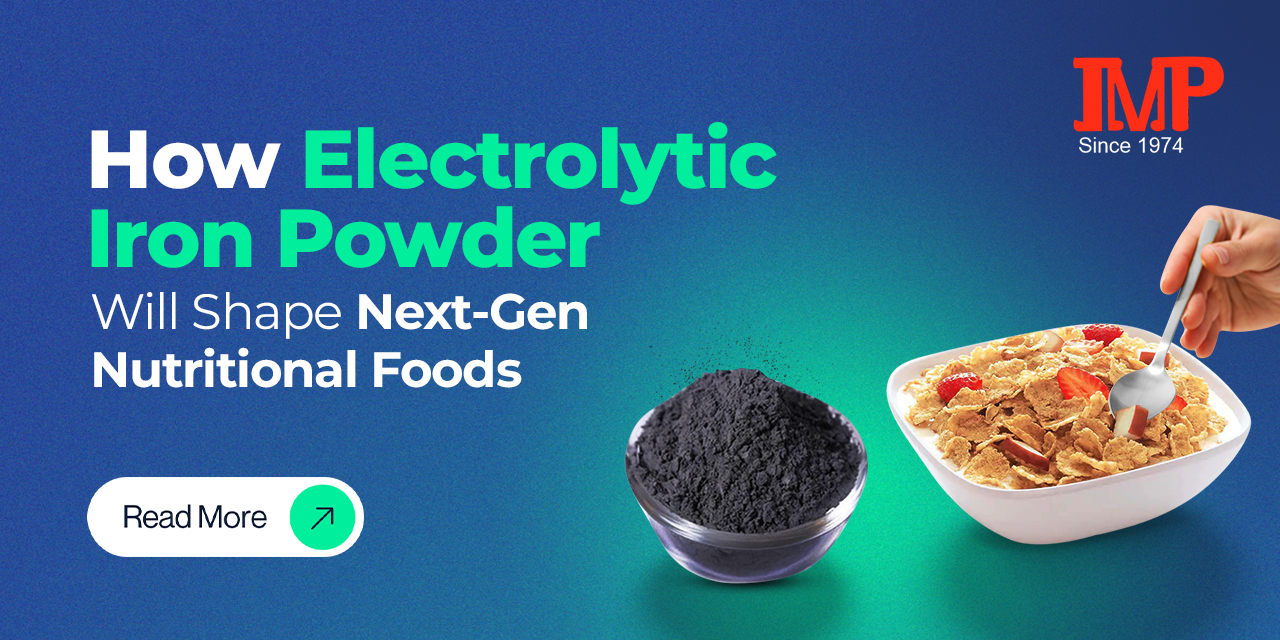
Nutrition science is entering a new stage where food is created to promote health rather than simply address hunger. Electrolytic iron powder is one of the key developments in food fortification, as it enhances iron absorption and improves stability in everyday foods. As consumers shift toward more nutritious and safer food choices, brands are adopting refined sources of iron that deliver nutritional value without affecting taste, color, or overall food quality.
Electrolytic Iron Powder provider-Industrial Metal Powders (IMP) has been at the forefront of producing high-purity reduced iron powders through controlled electrolysis, advanced refinement, and 100% testing regimes over several decades. IMP holds FSSC 22000 certification, supporting applications in food, pharmaceuticals, and oxygen absorber products. This ensures consistency, safety, and sustainability across all batches while meeting global nutrition standards.
The Need for Smarter Iron Sources in Modern Nutrition
The strategy focuses on attracting a broader audience through products such as fortified cereals and packaged foods with clean labels, which create a positive perception in the target market. Iron deficiency continues to affect millions of consumers across all age groups, despite growing health awareness.
Studies have shown that nearly 30% of fortified food products fail consumer acceptance due to taste and sensory issues, highlighting the need for improved iron sources. The fine particle size of electrolytic iron powder enables uniform blending, improved absorption, and preservation of food quality.
Supporting Advanced Food Formulations Without Compromise
“Fortification should enhance nutrition, not disrupt the food experience.”
The growing demand for clean-label foods requires ingredients that do not interfere with flavor, shelf life, or appearance. Electrolytic iron integrates smoothly into recipes without oxidation or discoloration, making it suitable for cereals, snacks, flour mixes, and nutritional premixes. Research indicates that formulation stability improves by approximately 25% when a consistently Iron food fortification is done and pure iron source is used.
The Reason Behind Quality Control in Iron Fortification
Quality control is critical in electrolytic iron powders, as even minor contamination can affect safety and shelf life. At IMP, multi-stage testing, particle size verification, and chemical analysis ensure compliance with FSSC 22000 requirements. This regulated approach supports traceability, uniformity, and long-term product reliability, while also enhancing sustainability.
Iron Fortification for Global Wellness Programs
Community nutrition programs and the distribution of fortified foods through feeding and social initiatives play a vital role in improving dietary habits and public health outcomes. Electrolytic iron is widely adopted due to its stability across diverse food applications and processing conditions.
- Supports large-scale nutrition programs
• Remains stable over extended periods
• Suitable for diverse dietary patterns
Cleaner, Stronger, Smarter Nutritional Foods
“Purity today defines nutrition tomorrow.”
As functional foods gain prominence, electrolytic iron powder is shaping products that meet higher expectations for safety, performance, and sustainability. Its mild sensory profile and high bioavailability allow brands to deliver essential nutrients through foods that remain natural, enjoyable, and effective.
Key Benefits of Electrolytic Iron Powders
• High bioavailability with minimal sensory impact
• Excellent stability during processing and storage
• Consistent performance supported by 100 percent testing
Conclusion
The future of nutrition depends on pure and reliable ingredients that enhance daily well-being without compromise. Electrolytic iron powder manufacturer IMP is a leading this transformation by offering stability, safety, and formulation flexibility. Through rigorous quality control, certified production processes, and a commitment to responsible manufacturing, IMP supports healthier communities while developing next-generation fortified products.


